



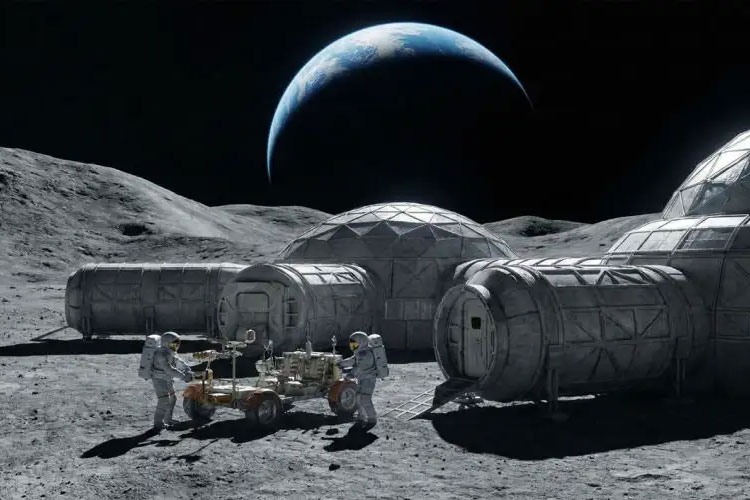
Just a year ago, Elon Musk called the Moon a “distraction,” completely focused on the ambitious goal of building a self-sufficient city on Mars within the next 20 years. But in February 2026, the SpaceX founder made a sharp strategic turn. Now the company’s main priority is not the Red Planet, but the return of American astronauts to the lunar surface and the establishment of a permanent settlement there. According to Musk, building a city on the Moon is possible in less than 10 years, a faster, more realistic way to ensure the security of civilization in the foreseeable future.
This shift is closely linked to the US political agenda. President Donald Trump’s executive order on “ensuring American space supremacy” aims to see the American flag again on the Moon during his second term in office, within the next three years. The appointment of Jared Isaacman, a close ally of Musk, as NASA chief could accelerate the process of abandoning the government’s heavy-duty systems and moving to a new partnership based on SpaceX’s reusable Starship rockets.
But the technical and competitive challenges remain serious. Starship has yet to complete orbital tests and prove its ability to land on another celestial body. Meanwhile, Jeff Bezos’ Blue Origin has made significant progress and is already seen as SpaceX’s most serious competitor for lunar contracts. Musk’s interest in the Moon also has a technological component. The recent merger of SpaceX and xAI suggests an intention to create space-based orbital data centers that will provide enormous computing power for the development of artificial intelligence.